thumbnail image

CHEMOGENETICS.ORG

  • HOME
  • About
  • Overview
  • History
  • Technologies
  • Discoveries
  • …  
    • HOME
    • About
    • Overview
    • History
    • Technologies
    • Discoveries

CHEMOGENETICS.ORG

  • HOME
  • About
  • Overview
  • History
  • Technologies
  • Discoveries
  • …  
    • HOME
    • About
    • Overview
    • History
    • Technologies
    • Discoveries
  • What is Chemogenetics?

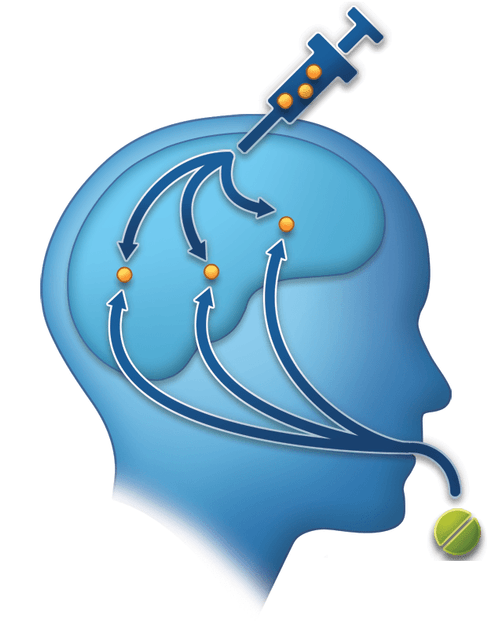
    Chemogenetics is a technology that allows scientists to control the activity of specific cells, particularly brain cells, using specially designed receptors and medications. By introducing engineered receptors into selected cells, researchers can turn those cells on or off simply by administering a matching chemical compound. This makes it possible to study how different groups of brain cells contribute to behavior, emotion, movement, pain, and addiction with a level of precision that traditional medications cannot achieve. Beyond helping scientists understand how the brain works, chemogenetics holds exciting potential for developing new treatments for neurological and psychiatric conditions by allowing targeted control of specific cells and brain circuits.

  • History of CHEMOGENETICS

    The First Lock

    1998-2006

    Chemical genetics, in the sense Stuart Schreiber and others used the phrase, meant asking a genetic-style question with a small molecule: remove a function, quickly, and only that function. GPCRs were an obvious place to try to build the tool on purpose. In 1998 Coward, Wada, and colleagues described Ro1, a κ-opioid receptor mutant that ignored dynorphin and answered spiradoline. They called it a RASSL. It proved the principle and advertised the failure mode. Spiradoline is not inert in a normal animal. The mutant was not perfectly inactive. Through the early 2000s a handful of other RASSLs were made, and almost none of them became a method other laboratories could trust in vivo. The field needed a receptor evolved against a ligand that did nothing else.

    Evolving the Lock: DREADDs

    2007-2016

    Bryan Roth’s laboratory stopped drawing the mutations and let yeast evolution find them. Armbruster, Li, Pausch, Herlitze, and Roth reported in 2007 a family of human muscarinic receptors, altered at two orthosteric positions (Ballesteros–Weinstein Y3.33 and A5.46), potently activated by clozapine-N-oxide (CNO) and essentially insensitive to acetylcholine. CNO was chosen because it was regarded as an inert metabolite of the antipsychotic clozapine. They named them DREADDs. Two years later Alexander and colleagues put hM3Dq into mouse neurons with a transgenic cross and changed behavior with a systemic injection. The same year Guettier and colleagues retargeted the scaffold to Gs and controlled insulin release. Chemogenetics became a systems tool. The bargain was attractive next to optogenetics, which had arrived in 2005 and owned the millisecond: no fiber optic, both hemispheres at once, a manipulation that lasts a session, repeatable across days, and in principle writable as a gene therapy plus a pill.

    The toolkit thickened. Cre- and Flp-dependent AAVs put DREADDs under cell-type control. Vardy and colleagues added KORD in 2015, a κ-opioid DREADD opened by salvinorin B, so excitation and inhibition no longer had to share a ligand. By 2016 Roth’s Neuron primer could treat DREADDs as standard equipment.

    Ion channel Locks: PSAM/PSEM

    2011

    The PSAM/PSEM (Pharmacologically Selective Actuator Module/Pharmacologically Selective Effector Molecule) chemogenetic technology was pioneered by Scott Sternson and colleagues at the Janelia Research Campus and first reported in Science in 2011. The researchers used a protein-engineering strategy based on a modified ligand-binding domain of the α7 nicotinic acetylcholine receptor (α7 nAChR), introducing mutations that enabled selective recognition of synthetic ligands (PSEMs) while minimizing activation by endogenous acetylcholine. These engineered receptor domains (PSAMs) were then coupled to ion-channel pore domains from other receptors, including the 5-HT₃ receptor and glycine receptor, creating modular tools capable of either directly exciting or inhibiting genetically targeted neurons. The team demonstrated selective neuronal activation and silencing in vitro and, importantly, established in vivo efficacy by reversibly suppressing hypothalamic neuron-driven feeding behavior in mice. This work introduced a complementary chemogenetic platform offering direct control of neuronal excitability through ligand-gated ion channels rather than G-protein-coupled receptor signaling.

    The clozapine revelation: The path for DREADDs to the clinic

    2017-present

    A pivotal advance in the development of DREADD chemogenetics came in 2017, when Gomez, Bonaventura, Michaelides and colleagues made the unexpected discovery that clozapine, rather than its purported actuator clozapine-N-oxide (CNO), is the principal pharmacologically active ligand responsible for central DREADD activation in vivo. Published in Science, this study demonstrated that CNO has poor brain penetration and is converted metabolically to clozapine, which exhibits substantially higher affinity and potency at the engineered muscarinic receptors hM3Dq and hM4Di. Using PET imaging, receptor occupancy studies and behavioral experiments, the investigators established that systemically administered clozapine readily occupies brain-expressed DREADDs and that subthreshold doses can produce preferential DREADD-mediated effects. This discovery fundamentally changed the understanding of DREADD pharmacology and identified an FDA-approved medication as a viable actuator with potential for clinical translation. Building on this finding, Michaelides and colleagues subsequently developed a new generation of high-potency DREADD agonists, reported in Nature Communications in 2019. Through structure-guided medicinal chemistry based on clozapine, the team developed JHU37152 and JHU37160, novel agonists with nanomolar affinity, excellent brain penetration and high in vivo potency at both excitatory and inhibitory DREADDs. The study also introduced [¹⁸F]JHU37107, the first dedicated fluorine-18 PET radiotracer for DREADDs, enabling noninvasive visualization of receptor expression, including at distant neuronal projection sites. Critically, the compounds were validated across rodents and nonhuman primates, establishing a pharmacological and molecular-imaging toolkit that substantially advanced the potential of DREADD technology for translational neuroscience and therapeutic applications.

    Improved PSAM4: The path for PSAM4 to the clinic

    2019-present

    A major advance in chemogenetics came in 2019, when Magnus, Lee, Bonaventura, Michaelides, Sternson and colleagues reported the development of PSAM4 in Science. Through structure-guided receptor engineering, they introduced three mutations (L131G, Q139L, Y217F) into the α7 nAChR ligand-binding domain, producing a receptor with dramatically enhanced sensitivity to varenicline, an FDA-approved smoking-cessation medication. The resulting PSAM4 platform supported both neuronal inhibition through PSAM4-GlyR and excitation through PSAM4-5HT3. Importantly, the study also developed a new generation of ultrapotent PSEMs (uPSEMs), including compounds with subnanomolar potency and exceptional selectivity, such as uPSEM817 (EC₅₀ approximately 0.3 nM). The technology was validated through electrophysiology, behavioral studies, calcium imaging and PET in rodents, as well as electrophysiological demonstration of neuronal silencing in a rhesus macaque. Together, these advances substantially expanded the pharmacological capabilities of PSAM/PSEM chemogenetics, improving potency, selectivity, and translational potential while establishing a versatile platform for bidirectional control of neuronal activity.

    Synthetic physiology

    2025-present

    An important subsequent milestone was the development of cocaine-responsive chemogenetics, reported by Gomez, Magnus, Bonaventura, Michaelides, Sternson and colleagues in Nature in 2025. This work represented a conceptual extension of PSAM/PSEM technology: rather than relying on an externally administered synthetic ligand to activate an engineered receptor, the investigators engineered ion channels that are directly activated by cocaine itself. Using protein engineering of the α7 nicotinic acetylcholine receptor ligand-binding domain, the team generated cocaine-gated channels, including coca-5HT3, with high sensitivity to cocaine and selectivity over endogenous molecules and other addictive drugs. The resulting receptor was expressed in neurons of the lateral habenula (LHb), a brain region normally inhibited by cocaine. Cocaine exposure therefore activated the engineered channels, producing an artificial neuronal feedback signal that opposed cocaine's normal effects on brain reward circuitry. In rats, this approach suppressed cocaine self-administration, particularly under high-effort conditions, without impairing motivation for food. Using PET imaging with [¹⁸F]fallypride, alongside complementary neurochemical approaches, the investigators demonstrated that cocaine-gated activation of LHb neurons attenuated cocaine-induced increases in extracellular dopamine in the nucleus accumbens. This study introduced the concept of synthetic physiology: engineering artificial, drug-dependent feedback mechanisms that selectively counteract the physiological effects of addictive substances. It also established a potential foundation for developing chemogenetic gene therapies that respond directly to addictive drugs while sparing natural reward processes. Importantly, this was a distinct extension of the broader receptor-engineering strategy rather than simply another PSAM4/PSEM variant.

  • Technologies

    hM3Dq

    Gq-coupled muscarinic DREADD

    Gq-rises Ca2+

    Ligands: Low-dose clozapine, DCZ, JHU37160, CNO, C21

    hM4Di

    Gi-coupled muscarinic DREADD

    Gi-lowers cAMP; opens GIRK

    Ligands: Low-dose clozapine, DCZ, JHU37160, CNO, C21

    rM3Ds

    Gs-coupled muscarinic DREADD

    Gs-raises cAMP

    Ligands: Low-dose clozapine, DCZ, JHU37160, CNO, C21

    KORD

    k-opioid DREADD

    Gi-inhibition; silences

    Ligands: Salvinorin B

    PSAM4-GlyR

    Ligand-gated chloride actuator

    Chloride shunt; hyperpolarizes

    Ligands: Varenicline, uPSEM792, uPSEM817

    PSAM4-5HT3

    Ligand-gated cation actuator

    Cation entry - deporalizes

    Ligands: Varenicline, uPSEM792, uPSEM817

    Coca-GlyR

    Cocaine-gated chloride channel

    Chloride chunt- silences when cocaine is present

    Ligands: cocaine

    Coca-5HT3

    Cocaine-gated cation channel

    Cation entry - excites when cocaine is present

    Ligands: cocaine

  • DISCOVERIES

    THE PAPERS THAT ESTABLISHED THE FIELD
    Section image

    The first receptor built to ignore its transmitter

    Coward et al., PNAS

    Ro1, a κ-opioid RASSL activated by spiradoline, showed that a GPCR’s lock could be recut. It also showed why hand-built versions stalled: the synthetic ligand was psychoactive, and selectivity was incomplete. Everything later is a response to those two defects.

    Section image

    DREADDs, evolved rather than drawn

    Armbruster et al., PNAS

    Directed molecular evolution produced muscarinic receptors potently activated by CNO and insensitive to acetylcholine. hM3Dq and hM4Di are still the receptors most of the literature, and the first human trials, actually use.

    Section image

    A systemic drug changes behavior, cell type by cell type

    Alexander et al., Neuron

    The first demonstration that a neuron-restricted DREADD plus an injection could alter behavior in an intact mammal. Chemogenetics left the culture dish and entered systems neuroscience.

    Section image

    The same scaffold, a different G protein

    Guettier et al., PNAS

    rM3Ds coupled the DREADD ligand to Gs and controlled pancreatic β cells in vivo. Proof that the platform was a coupling choice, not a single trick for firing neurons.

    Section image

    An ion channel with a private ligand

    Magnus, et al., Science

    PSAMs — evolved nicotinic binding domains spliced onto cation or chloride pores — gave chemogenetics a direct conductance, orthogonal to every GPCR ligand. The ancestor of the varenicline actuators now discussed for therapy.

    Section image

    Two switches in one animal

    Vardy et al., Neuron

    KORD, opened by salvinorin B and not by CNO, made multiplexed excitation and inhibition practical. It is the reason ‘DREADD’ is a family of pairs, not a single receptor.

    Section image

    CNO was not the molecule in the brain

    Gomez et al., Science

    PET occupancy showed systemic CNO barely engages brain DREADDs. Clozapine, produced by reverse metabolism, does, and binds them with high affinity. The most important self-correction in the method. Dosing, ligand choice, and control groups all changed because of it.

    Section image

    Ligands potent enough to image the receptor

    Bonaventura et al., Nature Communications

    JHU37152 and JHU37160, from the Michaelides group with Horti, Richmond, and colleagues, activate muscarinic DREADDs at very low dose, enter the brain as themselves, and support PET. They are what ‘know your occupancy’ looks like as a reagent.

    Section image

    An approved drug becomes an actuator

    Magnus et al., Science

    PSAM4 reaches sub-nanomolar potency. One of its agonists is varenicline, already approved for smoking cessation, used here at exposures meant to spare endogenous nicotinic receptors. This is the paper that made a clinical path look like pharmacology rather than science fiction.

    Section image

    A fast brain-penetrant agonist for mice and monkeys

    Nagai et al., Nature Neuroscience

    Deschloroclozapine binds muscarinic DREADDs roughly two orders of magnitude more tightly than CNO, occupies them within minutes, and does not depend on conversion to clozapine. It became the default recommendation for many new in vivo DREADD studies, including in macaques, and a PET tracer.

    Section image

    Human sensory neurons, silenced

    Perez-Sanchez et al., Science Translational Medicine

    PSAM4–GlyR plus varenicline cut acute, inflammatory, and neuropathic pain behaviors in mice, and quieted human iPSC-derived sensory neurons — including cells from a patient with inherited erythromelalgia caused by a gain-of-function Nav1.7 mutation. Human tissue, not yet a human trial.

    Section image

    A channel that listens for the drug of abuse

    Gomez et al., Nature

    Michaelides, Sternson, and colleagues built cocaine-gated ion channels: Coca-5HT3 (cation pore, excitation) and Coca-GlyR (chloride pore, inhibition). Coca-5HT3 in the rat lateral habenula suppressed cocaine self-administration without suppressing food motivation, and blunted the accumbens dopamine rise. Synthetic physiology: the disease drug is the actuator.

    Section image

    The first human studies

© 2019

Terms & Conditions
    Cookie Use
    We use cookies to ensure a smooth browsing experience. By continuing we assume you accept the use of cookies.
    Learn More